High-Rise Window Cleaning in Miami: The Complete Guide for Property Managers & HOAs
Miami's skyline is one of the most iconic in the world — and keeping those gleaming glass towers spotless is a job that demands specialized skill, rigorous safety compliance, and a deep understanding of South Florida's relentless coastal climate. For property managers, HOA boards, and building engineers, high-rise window cleaning isn't a cosmetic luxury. It's a critical part of protecting your building's most valuable asset: its glass.
Whether you manage a condo tower in Brickell, a luxury high-rise in Sunny Isles Beach, a mixed-use building in Wynwood, or a boutique tower in Coconut Grove, this guide breaks down everything you need to know about high-rise window cleaning in Miami — from cost and frequency to safety, salt spray protection, and how to choose the right contractor.
Why High-Rise Window Cleaning Matters in Miami
Miami's glass towers are the face of the city. For residents and commercial tenants paying premium prices for a view, dirty or streaked windows are more than an annoyance — they're a breach of the luxury experience they're paying for. But the stakes go far beyond aesthetics.
Miami's coastal environment is uniquely harsh on glass. Salt spray from the Atlantic, high humidity, intense UV exposure, and seasonal storms combine to coat high-rise windows in a corrosive film that, left untreated, permanently etches the glass. Once etching occurs, the only solution is costly glass replacement — often running into hundreds of thousands of dollars for a single tower.
Regular professional high-rise window cleaning is the single most effective way to extend the life of your building's glass, protect property values, keep residents and tenants happy, and maintain the architectural integrity that defines Miami's skyline.
Miami's Coastal Climate: The #1 Threat to High-Rise Glass
If you manage a building in Miami, Miami Beach, Sunny Isles, or Aventura, you already know the battle. Here's exactly what your windows are up against every single day:
- Salt spray from the ocean that leaves a corrosive mineral film on glass within days
- High humidity that fuels mold, mildew, and organic growth on frames and sills
- Intense South Florida UV that bakes contaminants onto the glass surface
- Hard water stains from building irrigation systems and rooftop equipment
- Pollen and airborne debris that accumulate rapidly during spring and summer
- Storm-driven salt, sand, and debris that coat windows during hurricane season
The closer your building is to the water — think Miami Beach, Sunny Isles Beach, Brickell's waterfront corridor, and the Aventura skyline — the more aggressive the salt exposure. Towers in these areas require more frequent cleaning to prevent permanent damage.
How High-Rise Window Cleaning Actually Works
High-rise window cleaning is a specialized discipline that bears little resemblance to residential cleaning. The methods used depend on the building's height, design, and the access systems it has in place. Here are the primary techniques used on Miami's towers:
High-Rise Access Methods
Rope Descent Systems (RDS)
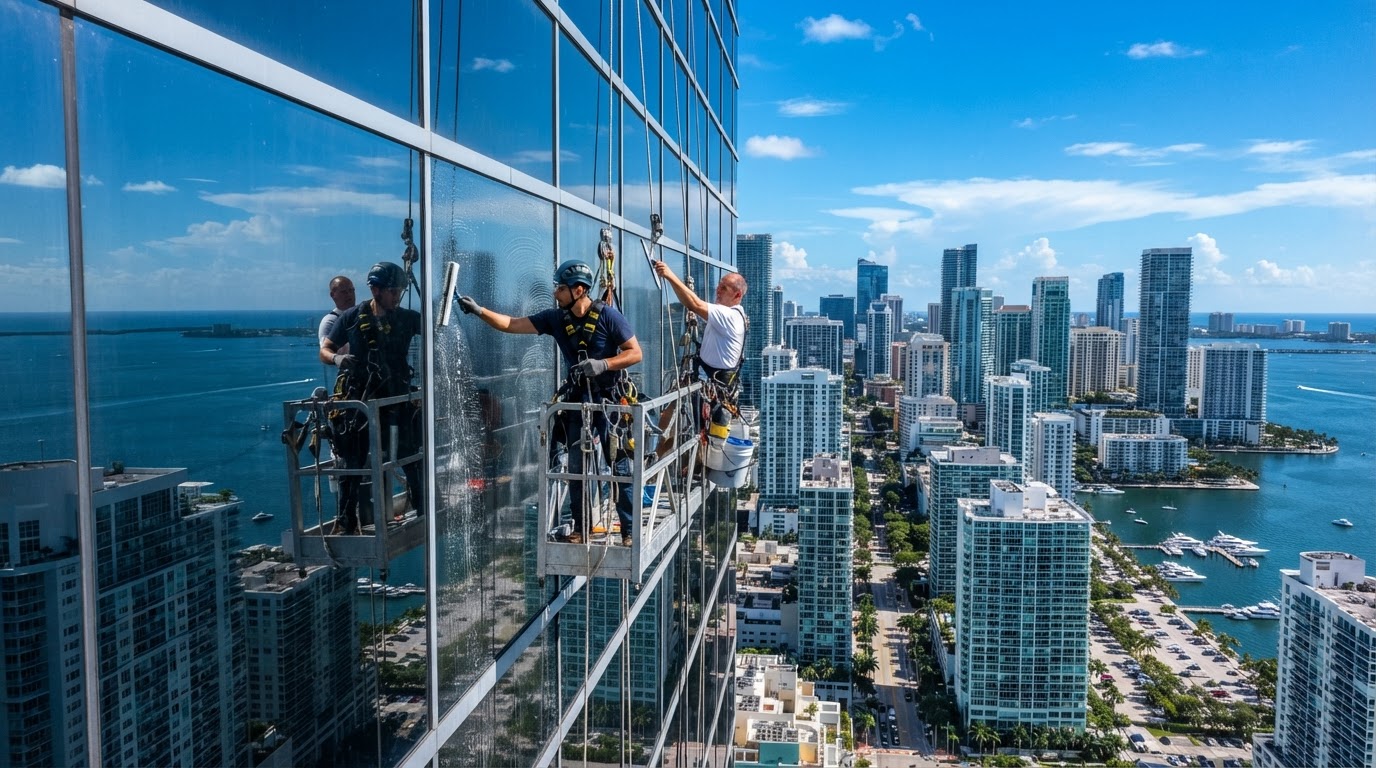
Technicians descend from the rooftop using certified ropes, harnesses, and anchors. The standard method for buildings 300+ feet, common across Brickell and Downtown Miami.
Bosun's Chair
A single-seat suspended platform that allows precise, controlled cleaning of individual window sections on tall facades.
Building Maintenance Units (BMU)
Permanently installed rooftop rigging and cradles that lower platforms along the building's facade — found on many modern Miami high-rises.
Water-Fed Pole Systems
Purified water delivered through extendable poles for lower and mid-rise sections. Reaches upper floors from balconies or accessible ledges without chemicals.
At Palm Breeze Crystal Clean, we evaluate your building's design, height, and existing access systems to determine the safest and most efficient method — and we coordinate directly with your building engineer and management team.
How Often Should a Miami High-Rise Be Cleaned?
There's no one-size-fits-all answer, but here's the framework we recommend for Miami high-rises based on location and exposure:
- Waterfront towers (Miami Beach, Sunny Isles, Brickell waterfront): quarterly exterior cleaning to prevent salt etching
- Downtown and inland high-rises (Downtown Miami, Wynwood, Edgewater): every 4–6 months
- Inland boutique towers (Coral Gables, Coconut Grove): bi-annually, with post-storm touch-ups
- Post-hurricane or major storm: immediate cleaning to remove salt and debris before etching sets in
- Lobbies, entrances, and ground-floor glass: weekly to monthly for high-traffic presentation
The goal is simple: never let salt and contaminants sit long enough to etch the glass. A recurring maintenance plan is almost always more cost-effective than reactive cleaning or, worse, glass replacement.
What High-Rise Window Cleaning Costs in Miami
High-rise window cleaning is priced per project, not per window. The cost depends on several factors that property managers should understand when budgeting:
- Building height — taller towers require more time, specialized access, and larger crews
- Total number of windows and glass surface area
- Access method — RDS, BMU, or water-fed pole each carry different labor and equipment costs
- Glass condition — heavily soiled or salt-etched glass may require restoration
- Cleaning frequency — recurring contracts reduce the per-visit cost significantly
- Building-specific logistics — roof access, anchor points, security coordination, and resident notifications
Because every high-rise is unique, we provide free, no-obligation estimates tailored to your building. The most cost-effective approach is a recurring maintenance contract, which locks in pricing and ensures your glass is never left vulnerable to salt damage.
Safety & Compliance: What Property Managers Must Verify
High-rise window cleaning is serious work, and safety isn't optional — it's a legal and liability requirement. Before hiring any contractor for your Miami high-rise, verify the following:
- Full general liability and workers' compensation insurance
- OSHA-compliant rope descent system (RDS) certification and training
- Proper safety harnesses, anchors, and equipment inspections
- Willingness to provide a Certificate of Insurance (COI) naming your building as additional insured
- Experience working with building engineers and property management teams
- A documented safety plan for your specific building
Palm Breeze Crystal Clean meets all of these requirements. Our high-rise technicians are certified, insured, and experienced on Miami's tallest buildings — and we provide every document your management company or HOA board needs.
Serving Miami's Premier Neighborhoods
We provide high-rise window cleaning across Miami and the surrounding Miami-Dade area, including:
Choosing the Right High-Rise Window Cleaning Company
For property managers and HOA decision-makers, the right contractor is a long-term partner — not a one-time vendor. Look for a company that:
- Specializes in high-rise and commercial buildings, not just residential homes
- Understands Miami's salt-air challenges and recommends a proactive cleaning schedule
- Provides COIs and works seamlessly with property management and engineers
- Offers recurring maintenance contracts with locked-in pricing
- Has a proven track record and verifiable reviews from other Miami high-rises
- Communicates clearly about scheduling, resident notifications, and safety protocols
Frequently Asked Questions
How much does high-rise window cleaning cost in Miami?
High-rise window cleaning in Miami is priced per project based on building height, number of windows, glass type, access method (rope descent, BMU, or water-fed pole), and cleaning frequency. Most Miami high-rises receive custom quotes. Contact Palm Breeze Crystal Clean at 754-218-2262 for a free, no-obligation estimate tailored to your building.
How often should a Miami high-rise have its windows cleaned?
Most Miami high-rise buildings schedule exterior window cleaning monthly, quarterly, or bi-annually. Coastal towers in Miami Beach, Sunny Isles, and Brickell benefit from quarterly cleaning to prevent salt etching, while inland buildings in Coral Gables and Coconut Grove may clean bi-annually. We help property managers build a frequency plan that protects the glass and fits the budget.
Is high-rise window cleaning safe and insured?
Yes. Palm Breeze Crystal Clean is fully insured, and our high-rise technicians are OSHA-compliant, certified in rope descent systems (RDS), and equipped with professional safety harnesses. We provide Certificates of Insurance (COIs) and work directly with building management and engineers to meet all safety and liability requirements.
Do you provide COIs for property managers and HOAs?
Absolutely. We supply Certificates of Insurance for every high-rise and commercial property we service, naming your building, HOA, or management company as additional insured. We coordinate with property managers, engineers, and security to schedule access and comply with building-specific requirements.
Can you remove salt spray and hard water stains from high-rise glass?
Yes. Miami's coastal salt spray leaves a corrosive film on high-rise glass that can permanently etch the surface if left untreated. Our purified water system and professional techniques remove salt residue and hard water spots, and we recommend a recurring schedule to prevent permanent damage to your building's glass.
What areas do you serve for high-rise window cleaning?
We provide high-rise window cleaning across Miami and Miami-Dade County, including Brickell, Downtown Miami, Miami Beach, Sunny Isles Beach, Aventura, Wynwood, Edgewater, Coral Gables, Coconut Grove, and surrounding areas. Call 754-218-2262 to confirm service for your building.
Protect Your Building's Glass
Get a free high-rise window cleaning estimate for your Miami building. Serving Brickell, Miami Beach, Sunny Isles, Aventura, and all of Miami-Dade.